The Ultimate Office Cleaning Checklist For A Healthier Workplace
- Blog
- The Ultimate Office Cleaning Checklist For A Healthier Workplace
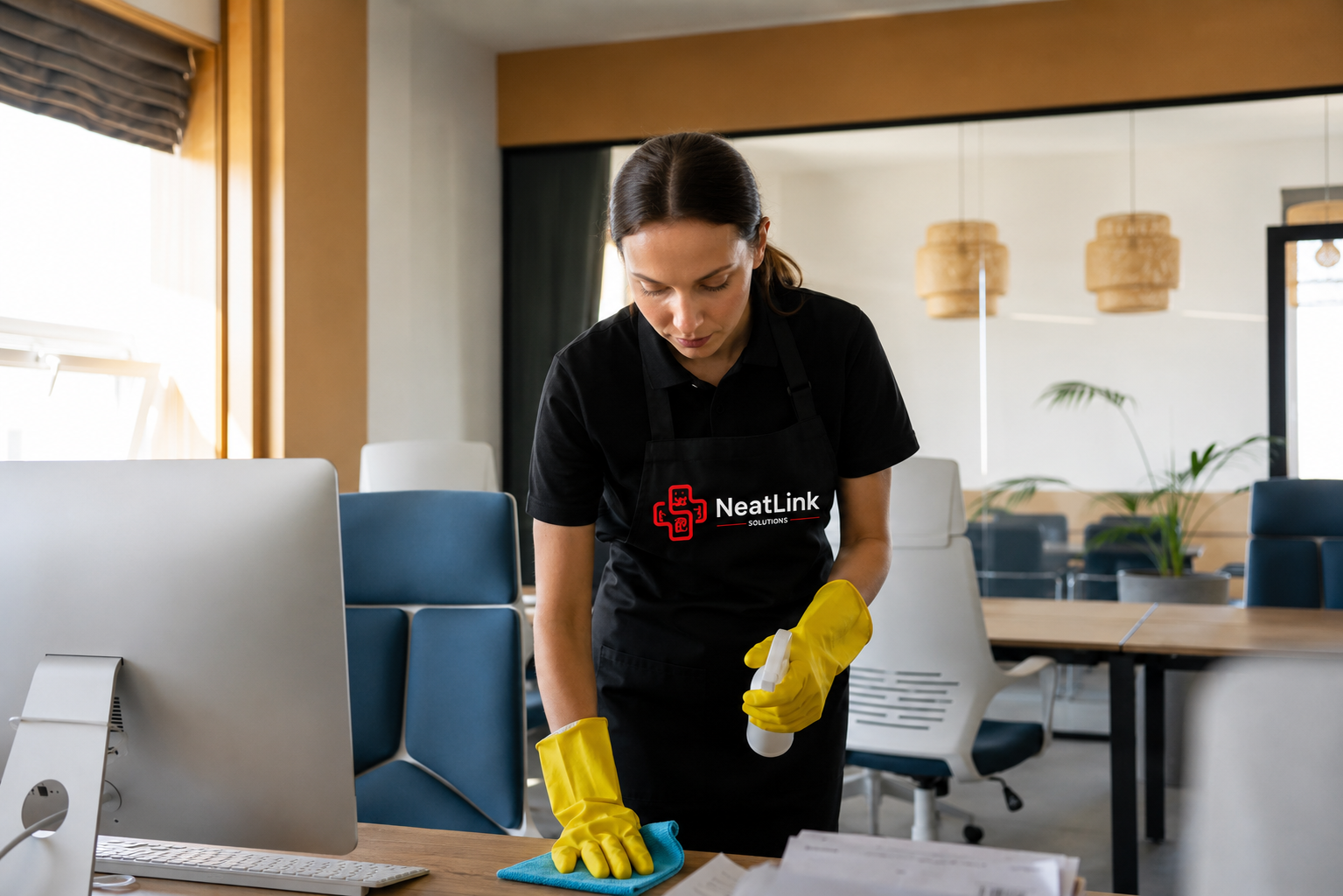
Office cleanliness has become an essential part of maintaining healthy and productive workplaces. In modern office environments, employees spend long hours sharing desks, meeting rooms, kitchens, and communal facilities, making workplace hygiene more important than ever. A clean office not only improves presentation but also supports employee wellbeing, reduces the spread of germs, and creates a more comfortable environment for staff and visitors. Structured cleaning routines help businesses maintain consistent hygiene standards while improving operational efficiency and workplace morale. This guide explores the importance of office cleaning, outlines practical cleaning routines, and explains how a well organised office cleaning checklist can contribute to a healthier workplace.
Why Office Cleaning Matters For Workplace Health?
A clean office environment directly affects employee health, comfort, and overall workplace performance. Offices contain multiple high touch surfaces and shared spaces that can quickly collect dust, bacteria, and germs if cleaning routines are inconsistent. Maintaining proper hygiene standards helps create a safer environment where employees can work more comfortably and confidently.
Poor workplace hygiene can contribute to increased sick days, reduced productivity, and lower employee morale. Dust buildup, dirty shared facilities, and neglected surfaces may also affect indoor air quality and create discomfort for staff and visitors. Businesses that prioritise office cleanliness guidelines are often better equipped to support employee wellbeing while maintaining a more professional working environment.
- Clean workplaces help improve employee health, safety, and overall comfort.
- Germs and bacteria can spread quickly through shared office spaces and high touch surfaces.
- Regular cleaning supports better indoor air quality and helps reduce workplace illnesses.
Maintaining an organised office cleaning schedule daily weekly monthly also allows businesses to identify hygiene concerns before they become larger problems. Consistent cleaning routines help create healthier workspaces while supporting long term workplace efficiency.
What Should An Office Cleaning Checklist Include?
A structured office cleaning checklist helps businesses maintain consistency and accountability across all areas of the workplace. Without a clear cleaning plan, important tasks may be overlooked, especially in busy office environments where multiple spaces require ongoing attention throughout the week.
A well organised workplace cleaning checklist should include all high traffic areas, shared facilities, and frequently touched surfaces. It should also separate routine maintenance tasks from deeper cleaning requirements to ensure hygiene standards are maintained consistently over time.
- Include all shared spaces such as reception areas, meeting rooms, kitchens, restrooms, and workstations.
- Identify cleaning priorities for high traffic and high touch areas used throughout the day.
- Separate daily maintenance tasks from weekly and monthly deep cleaning activities.
- Include sanitisation procedures for shared office equipment and communal facilities.
- Use checklists to improve accountability, consistency, and cleaning efficiency across the workplace.
A professional office cleaning checklist also helps businesses maintain office cleaning standards more effectively. By following structured routines, cleaning teams can ensure no important tasks are missed while maintaining a cleaner and more organised workplace environment.
Daily, Weekly & Monthly Office Cleaning Tasks
An effective office cleaning routine involves more than occasional tidying. Offices require structured cleaning schedules that address daily hygiene needs while also supporting long term maintenance. Dividing cleaning tasks into daily, weekly, and monthly responsibilities helps businesses maintain a more organised and hygienic environment without disrupting workplace operations.
Different office spaces have different cleaning requirements depending on employee numbers, visitor traffic, and the nature of the work being carried out. Shared facilities and high traffic areas often require more frequent attention to maintain proper hygiene standards.
Daily Office Cleaning Tasks
Daily cleaning focuses on maintaining hygiene and presentation across the most frequently used areas of the office. These tasks help prevent dirt buildup and reduce the spread of bacteria and germs throughout the workplace.
Bins should be emptied regularly, and liners replaced to prevent unpleasant odours and overflowing waste. Shared workstations, phones, keyboards, desks, and office equipment should be sanitised daily because they are touched frequently by multiple people. Kitchens, breakrooms, and restrooms also require daily cleaning to maintain hygiene and comfort for employees.
Vacuuming carpets and spot mopping hard floors help keep office spaces tidy while reducing dust accumulation. Reception areas and meeting rooms should also be checked regularly to ensure they remain presentable for visitors and clients.
Weekly Office Cleaning Tasks
Weekly cleaning tasks focus on deeper maintenance that supports long term workplace cleanliness and presentation. Shared spaces such as kitchens and meeting rooms often require more detailed cleaning to remove dirt, grease, and hidden dust buildup.
Dusting blinds, air vents, skirting boards, shelves, and hard to reach areas helps improve indoor air quality and maintain a cleaner environment. Carpet spot cleaning and floor polishing also help preserve the appearance and condition of office flooring.
Detailed restroom sanitisation is another important weekly task. This may involve descaling surfaces, cleaning grout lines, and disinfecting areas that are not always addressed during routine daily cleaning.
Monthly Office Cleaning Tasks
Monthly cleaning tasks are designed to support larger maintenance needs and improve overall workplace presentation. Deep carpet and upholstery cleaning help remove embedded dirt, allergens, and stains that regular vacuuming cannot fully address.
Interior window and glass cleaning improve natural light and contribute to a cleaner and more professional office appearance. High level dusting of ceilings, vents, walls, and light fixtures also helps reduce airborne dust and improve indoor comfort.
Monthly maintenance checks can also help businesses review office sanitation checklist procedures and identify areas requiring additional attention. These inspections support stronger office cleaning standards while helping workplaces maintain a consistently professional environment.
High-Touch Areas That Need Regular Disinfection
High touch surfaces are some of the most important areas included in any office hygiene checklist because they are used repeatedly throughout the day by employees, clients, and visitors. Without regular sanitisation, these surfaces can quickly become hotspots for germs and bacteria.
Regular disinfection helps reduce the spread of illness while supporting a healthier and safer workplace for everyone using the office.
- Door handles, lift buttons, handrails, and shared entry points.
- Shared office desks, meeting room tables, and reception counters.
- Phones, keyboards, printers, photocopiers, and office equipment.
- Kitchen appliances, breakroom surfaces, and shared utensils.
- Restroom touchpoints including taps, dispensers, and door handles.
Consistent sanitisation is especially important during cold and flu seasons when germs spread more easily through shared environments. Businesses that prioritise regular disinfection are often better equipped to maintain healthier workplaces and reduce employee absenteeism.
Benefits Of Maintaining A Clean Office Environment
Maintaining a clean office environment offers benefits that extend far beyond appearance alone. Clean workplaces contribute to healthier employees, stronger workplace morale, and more positive experiences for clients and visitors. A tidy and organised office also reflects professionalism and attention to detail, which can influence how a business is perceived externally.
Consistent cleaning routines also help reduce long term maintenance issues by protecting office furniture, carpets, and shared facilities from excessive wear and dirt buildup.
- Improved employee productivity, comfort, and workplace morale.
- Better workplace presentation for visitors, clients, and business partners.
- Reduced spread of germs, improved air quality, and stronger hygiene standards.
Businesses that follow clear office cleanliness guidelines are also more likely to maintain safer and more organised working environments. Cleaner spaces help employees feel more comfortable while supporting long term operational efficiency.
How Professional Office Cleaning Services Can Help
Professional office cleaning services help businesses maintain consistent hygiene standards while reducing the pressure on internal staff and management teams. Experienced cleaners use specialised equipment, professional grade products, and structured cleaning systems to deliver more reliable and effective results across all workplace areas.
Professional cleaning providers can also customise office cleaning schedules to suit different business environments, occupancy levels, and operational needs. Flexible cleaning plans allow businesses to maintain cleanliness without disrupting daily operations. Outsourcing office cleaning also provides access to trained professionals who understand workplace hygiene requirements, quality assurance procedures, and safe cleaning practices. This helps businesses maintain cleaner, healthier, and more professional work environments over the long term.
Key Takeaways
Office cleaning plays a vital role in supporting healthier, safer, and more productive workplaces. Structured cleaning routines improve hygiene, workplace presentation, and employee comfort while reducing the spread of germs and bacteria. Daily, weekly, and monthly cleaning tasks all contribute to maintaining strong office cleaning standards and long term workplace efficiency. High touch areas require regular sanitisation to minimise health risks, while professional office cleaning services help businesses maintain consistent and reliable cleaning practices across all workplace environments.
Latest Post
The Benefits Of Carpet Cleaning
Importance Of Cleanliness In Daily Life
The Ultimate Clinic Cleaning Checklist For Medical Centres & Facilities
Deep Cleaning Vs Regular Cleaning: What’s The Real Difference?
The Complete Guide To Janitorial Cleaning Checklists
The Key Benefits Of Hiring Professional Cleaning Services
What Is Strata Cleaning? Meaning, Purpose and Key Insights